01/26/2026 35
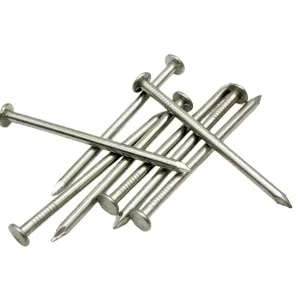
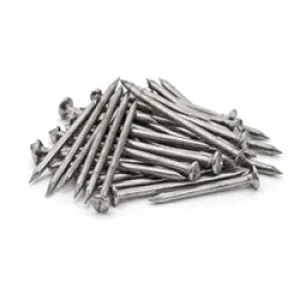
Selecting stainless steel nails is only part of the solution. To ensure maximum holding power, safety, and long-term performance, choosing the correct nail length and gauge is just as important.
At JLHY, we help contractors, distributors, and builders select the right nail specifications for different applications and materials.
Using the wrong nail size can lead to:
Weak holding strength
Wood splitting
Nail pull-out over time
Structural instability
Correct nail selection improves installation efficiency and finished quality.
Understanding Length | Understanding Gauge |
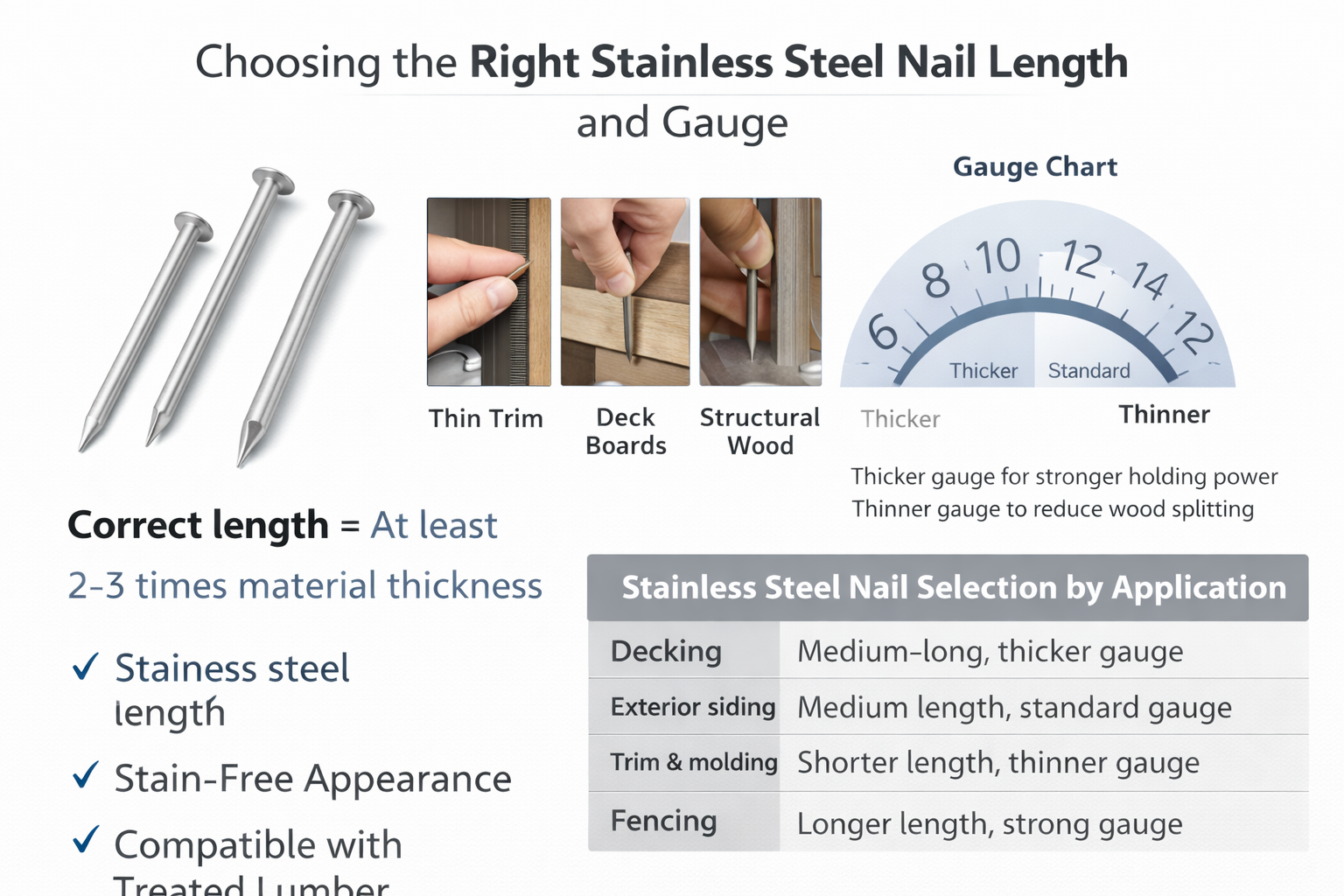
The nail should penetrate at least 2–3 times the thickness of the mat Common Examples:
Choosing the proper length ensures the nail anchors securely into the base material. rial being fastened. | Nail gauge refers to the thickness of the nail shaft:
How Gauge Affects Performance
|
Fastening heavy or structural materials
Working in outdoor or high-wind areas
Building decks or fences
Installing trim or finish boards
Working with hardwoods prone to splitting
Appearance is a priority
| Application | Recommended Nail Type |
|---|---|
| Decking | Medium–long, thicker gauge |
| Exterior siding | Medium length, standard gauge |
| Trim & molding | Shorter length, thinner gauge |
| Fencing | Longer length, strong gauge |
Choosing the right stainless steel nail length and gauge is essential for structural reliability, appearance, andlong-term durability. By matching nail size to the application, builders achieve better results with fewer issues.
With JLHY stainless steel nails, you get professional guidance, reliable quality, and confidence in every installation.