05/25/2026 9
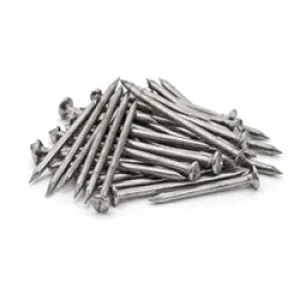
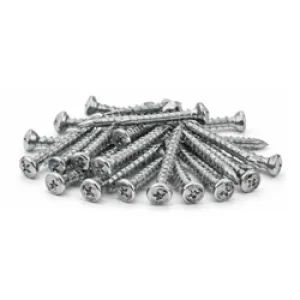
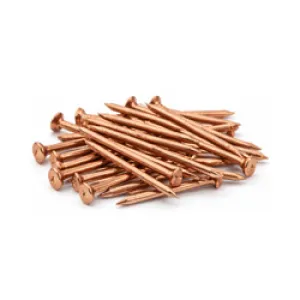
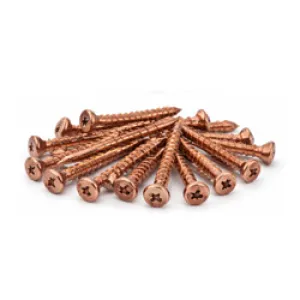
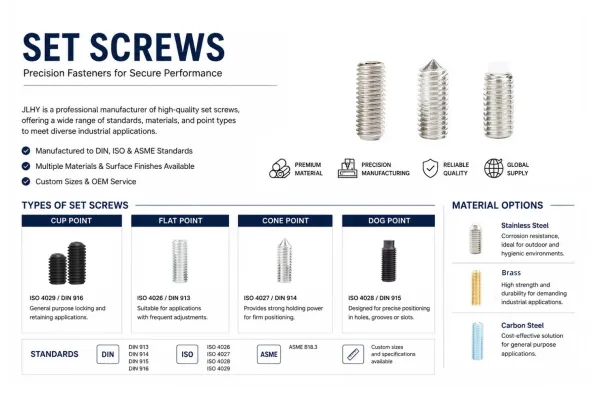
Among all material options, carbon steel and stainless steel fasteners are the most widely used. Each material offers distinct mechanical and environmental performance characteristics, making them suitable for different industrial conditions.
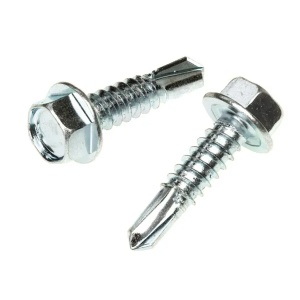
Carbon steel fasteners are widely favored in industrial applications that require high tensile strength and load-bearing capacity. Through controlled heat treatment processes such as quenching and tempering, carbon steel fasteners can achieve high hardness grades (e.g., Grade 8.8, 10.9, or 12.9), making them suitable for structural steel connections, heavy equipment assembly, and load-critical joints.
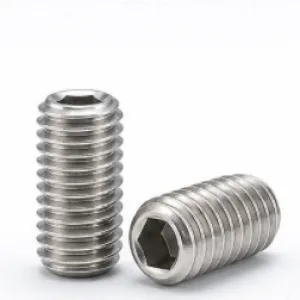
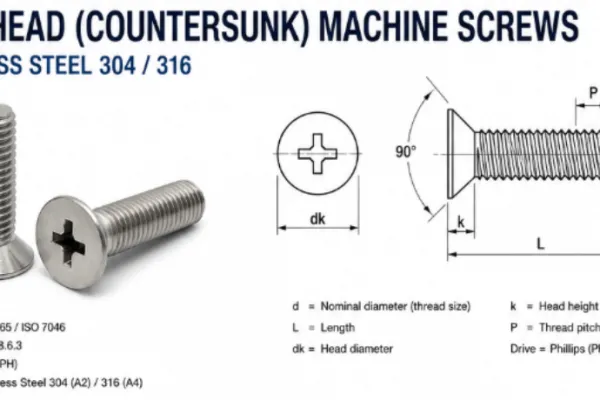
Stainless steel fasteners, while offering good mechanical strength, generally have lower tensile and yield strength compared to high-grade carbon steel. Austenitic stainless steels such as A2 (304) and A4 (316) are valued more for corrosion resistance than for extreme mechanical load performance. As a result, stainless steel fasteners are typically selected where environmental exposure outweighs strength requirements.
Corrosion resistance is the primary advantage of stainless steel fasteners. Their chromium-rich composition forms a passive oxide layer that protects against rust, even when the surface is scratched. This makes stainless steel fasteners ideal for outdoor installations, chemical plants, food processing facilities, marine environments, and projects exposed to moisture or aggressive atmospheres.
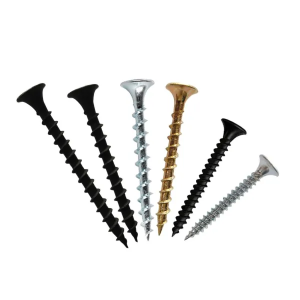
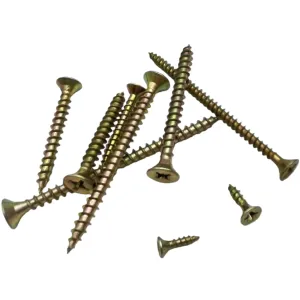
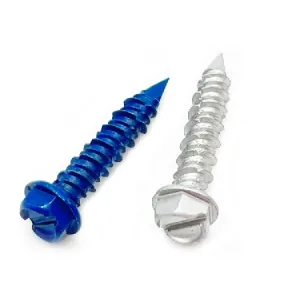
Carbon steel fasteners rely on surface coatings for corrosion protection. Common options include zinc plating, hot-dip galvanizing, mechanical galvanizing, and advanced ceramic or polymer coatings. While these coatings significantly improve corrosion resistance, their performance depends on coating thickness, application quality, and environmental severity. In harsh environments, coating degradation can eventually expose the base steel.
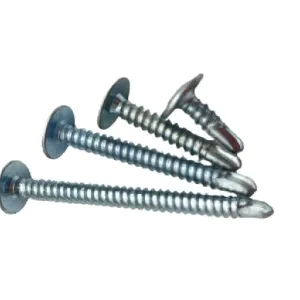
From a cost perspective, carbon steel fasteners are generally more economical, especially for large-scale industrial projects with high volume requirements. Their lower raw material cost, combined with efficient cold heading production, makes them the preferred choice for construction frameworks, steel structures, and general industrial fastening.
Stainless steel fasteners carry a higher material and processing cost, but they can reduce long-term maintenance and replacement expenses in corrosive environments. For distributors and project planners, the decision often involves balancing upfront procurement cost against long-term durability and reduced downtime.
Carbon steel fasteners are commonly used in steel structures, machinery manufacturing, automotive components, and industrial equipment where strength and fatigue resistance are critical. When paired with appropriate coatings, they perform well in most standard industrial environments.
Stainless steel fasteners are preferred in applications where hygiene, aesthetics, and corrosion resistance are essential, such as chemical processing plants, water treatment facilities, renewable energy installations, and coastal infrastructure.
As an experienced fastener manufacturer, JLHY supplies both carbon steel and stainless steel fasteners tailored to industrial requirements. Our carbon steel fasteners are produced using advanced cold heading technology, precision heat treatment, and a wide range of surface coating systems to meet international strength and corrosion standards. JLHY also manufactures stainless steel screws and bolts using high-quality 304 and 316 materials, ensuring consistent performance in corrosive and demanding environments. With integrated production lines covering forming, heat treatment, surface finishing, and inspection, JLHY supports OEM customization, bulk supply, and export-ready packaging for global distributors and contractors.