05/25/2026 27
When developing custom fasteners for industrial and construction applications, the manufacturing method plays a decisive role in cost, mechanical strength, dimensional accuracy, and scalability. Among all production technologies, cold heading and machining are the two most commonly compared processes.
Cold heading is a forming process in which metal wire is shaped into fasteners at room temperature using high-pressure dies. The material is cut to length and formed into the desired head shape through one or multiple forming stages. Because the metal is plastically deformed rather than removed, the internal grain flow follows the shape of the fastener, resulting in improved mechanical strength. It is widely used for screws, bolts, and other high-volume fasteners where consistency and efficiency are critical, especially suitable for standard and semi-custom fasteners that require tight tolerances and strong structural performance.
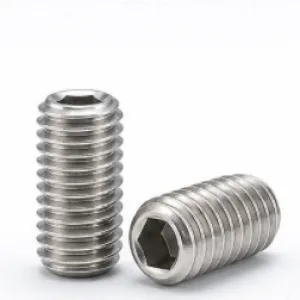
While, machining produces fasteners by cutting material away from bar stock using CNC lathes, mills, or turning centers. This method offers high flexibility in geometry and is often used for complex shapes, low-volume orders, or prototype development. Because machining removes material, it allows for intricate designs that may not be achievable with forming dies. However, the cutting process interrupts the natural grain structure of the metal, which can reduce mechanical strength compared to cold-formed fasteners.
From an engineering perspective, cold heading generally produces stronger fasteners than machining. The continuous grain flow formed during cold heading improves tensile strength, fatigue resistance, and shear performance. This makes cold-headed fasteners particularly suitable for load-bearing and structural applications. Machined fasteners, while dimensionally precise, rely more heavily on material grade to achieve strength. For applications where mechanical load is moderate and complexity is high, machining may still be an acceptable solution.
Cold heading is highly cost-effective for medium to large production volumes. Once tooling is developed, the per-unit cost is significantly lower due to high production speed, minimal material waste, and automated operation. This makes cold heading ideal for long-term supply programs and distributor-focused fastener products.
Machining, by contrast, involves longer cycle times and higher material waste, resulting in higher unit costs. It is better suited for small batches, low-volume customization, or early-stage product development rather than mass production.
Machining offers greater flexibility for complex geometries, special profiles, or frequent design changes. This is why it is often used for prototypes, specialty fasteners, or applications requiring non-standard dimensions.
Cold heading, while more limited in geometric flexibility, excels in producing custom fasteners once the design is finalized. With properly engineered tooling, cold heading can support a wide range of head types, shank designs, and thread configurations for custom screws and bolts.
For large-scale production, cold heading provides superior consistency. Automated forming ensures uniform dimensions across millions of pieces, reducing variation and installation issues. Combined with thread rolling, cold heading produces fasteners with excellent repeatability.
Machining offers high precision for individual parts, but maintaining consistent quality across large quantities can be more challenging and costly due to tool wear and longer processing times.
Many industrial fastener projects begin with machining for development and testing, then transition to cold heading once the design is confirmed and volume increases.
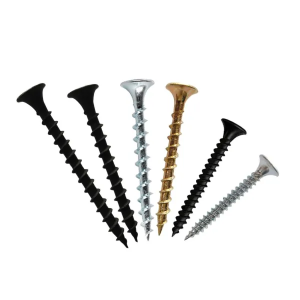
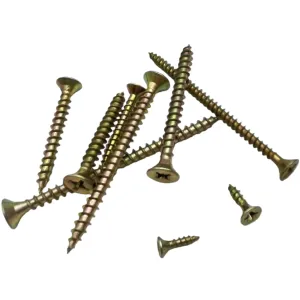
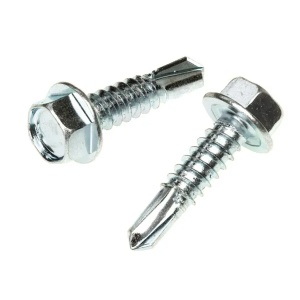
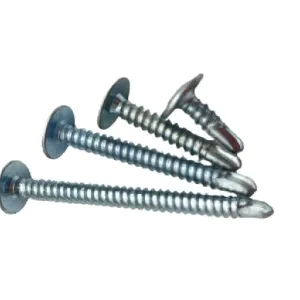
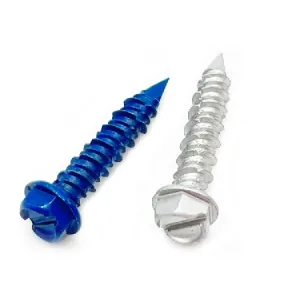
As an experienced fastener manufacturer, JLHY offers both cold heading–based mass production and engineering support for custom fastener development. JLHY specializes in drywall screws, self-tapping screws, and self-drilling screws produced through advanced cold heading and thread rolling processes.
With integrated heat treatment, coating systems, and in-house quality control, JLHY supports OEM and ODM customers seeking reliable, scalable custom fastener solutions. From design optimization to large-volume production, JLHY helps buyers select the most efficient manufacturing method based on application, performance, and cost requirements.